Readout / Trend-grounded
Hy4 preview: 770B MoE, open weights, gaps

Joshua HriskoPrincipal Engineer
6 min readSan Francisco, CA
Composed from the signals scanned on 2026-08-28.
Tencent’s Hy Team has released Hy4 preview — a 770B-parameter MoE text model — as Apache 2.0 weights on Hugging Face, deployable today through vLLM and SGLang. The model card lists four residual streams per layer: not the single stream that standard transformer implementations and inference kernels assume, and a structural detail the card provides without any explanation.
What it is
A text-generation instruct model available in two variants: a full-precision release and an FP8 quantised version (Hy4 preview-FP8). The licence is Apache 2.0 with no additional use restrictions stated in the model card. No predecessor model is named as replaced; no cloud endpoint or API is listed. The card labels this a “preview” without defining what that implies for stability or long-term availability.
| Property | Value | Condition / source |
|---|---|---|
| Total parameters | 770B | Tencent model card; backbone only |
| Activated per token | 49B | Tencent model card |
| MTP layer | 10B total, 0.7B activated | Tencent model card; excluded from backbone parameter count |
| Total layers | 78 | Tencent model card |
| Dense FFN layers | 1 (first layer only) | Tencent model card |
| MoE layers | 77 | Tencent model card |
| Routed experts per MoE layer | 256 | Tencent model card |
| Shared experts per MoE layer | 1 | Tencent model card |
| Experts activated per token | top-8 routed + 1 shared | Tencent model card |
| Attention type | Gated DSA | Tencent model card |
| Hidden size | 6,144 | Tencent model card |
| Attention heads | 64 | Tencent model card |
| Query compression dimension | 2,048 | Tencent model card |
| KV compression dimension | 512 | Tencent model card |
| Indexer heads / head dimension | 32 / 128 | Tencent model card |
| Indexer top-k | 2,048 | Tencent model card |
| Residual streams | 4 | Tencent model card |
| MoE intermediate size | 2,048 | Tencent model card |
| Dense FFN intermediate size (layer 1) | 18,432 | Tencent model card |
| Context length | 1M tokens | Tencent model card; quality at length not stated |
| Vocabulary size | 120,832 | Tencent model card |
| Licence | Apache 2.0 | Tencent model card |
| FP8 variant | Available (Hy4 preview-FP8) | Tencent model card |
| Reference deployment | TP=8; GPU type not stated | vLLM and SGLang sections, Tencent model card |
Evaluation figures and their conditions
The model card’s entire quantitative case is one internal study. The Tencent model card reports that 163 Tencent employees rated outputs on 203 engineering tasks in a blind side-by-side format. No task list, scoring rubric, or rater instructions are published. No external benchmark numbers appear.
Against GLM 5.3, the Tencent model card reports:
- Average scores: Hy4 preview 2.99 vs. GLM 5.3 2.92
- 46.8% wins / 12.8% ties / 40.4% losses; net win rate: 46.8 − 40.4 = 6.4 pp
Against Kimi K3, the Tencent model card reports:
- Average scores: Hy4 preview 2.99 vs. Kimi K3 2.94
- 51.2% wins / 7.9% ties / 40.9% losses; net win rate: 51.2 − 40.9 = 10.3 pp
Both comparisons use raters employed by the team releasing the model, on tasks that team selected. The card describes both results as “slightly ahead.”
The model card recommends temperature=0.9, top_p=1.0 for inference. The reasoning mode defaults to “high” (deep chain-of-thought), which the card states suits math, coding, and reasoning.
Conditions around the comparison
scroll →- 770B parameters
- Total parameters
- 78 layers
- Backbone layers
- 77 layers
- MoE layers
- 256 routed experts
- Number of MoE layer
Actual utility, by workload
The operative compute-per-token figure is 49B activated parameters. At any given token, 770 − 49 = 721B parameters are dormant experts. Per-forward-pass compute is in the range of a dense 49B model; routing overhead across 256 experts with top-8 selection adds latency the card does not quantify.
The Gated DSA attention mechanism compresses KV representations to dimension 512 against a hidden size of 6,144, and uses an indexer selecting from a top-k of 2,048 positions. That design is architecturally consistent with managing memory at very long contexts. The model card does not report retrieval accuracy, perplexity degradation, or throughput at any specific context length; the 1M figure is an architectural specification, not a verified quality claim.
The native MTP layer (0.7B activated from a 10B block) enables speculative decoding without a separate draft model. The vLLM deployment example specifies 3 speculative tokens via the MTP method; the SGLang example specifies 3 speculative steps and 4 draft tokens via the NEXTN algorithm. Neither section reports acceptance rate or throughput uplift for any hardware configuration or request distribution.
Try it if: you need an Apache 2.0 model at this weight class for long-context coding, mathematical reasoning, or structured analysis, and you have TP=8 or more across high-memory GPUs already provisioned. The FP8 variant and native speculative decoding reduce practical infrastructure burden compared to a naive full-precision deployment.
Hold off if: you need third-party benchmark coverage before deploying, your inference budget does not reach TP=8, or your task distribution falls outside the code/math/reasoning cluster the model card targets. The 203-task evaluation is not externally reproducible.
What the card leaves open
The four residual streams are listed in the specification table and never explained. A standard transformer accumulates all layer outputs into one residual stream per layer; four streams require a fundamentally different computation graph — branching paths, some form of ensemble residual, or something else the card does not describe. vLLM and SGLang inference runs through the documented flags. Any work that touches model internals — fine-tuning, continued pre-training, custom kernel development, or gradient analysis — requires understanding how those four streams interact before an implementation can be correct. No technical report is linked.
For context on how deployment configuration flags can mask what a model actually does at runtime, see the vLLM serving conditions note.
Method: this note was drafted by us.anthropic.claude-sonnet-4-6 from a single source — the model card for tencent/Hy4-preview. Before publication an automated gate re-checked every extracted claim against the source document (31 claim(s) and 36 quantity(ies) verified) and every claim-shaped number in the draft against that evidence (4 derived from it, no rows from our own tables were supplied to the draft). The studio has not re-run tencent/Hy4-preview’s benchmarks; figures attributed to it are its own.
FAQ
Does Apache 2.0 mean commercial use is unrestricted?
The Tencent model card states "Apache License 2.0" with no additional clauses listed. Apache 2.0 permits commercial use with standard attribution and patent notice requirements. Organisations with compliance constraints on Tencent-originated assets should verify separately; the licence text itself is permissive, but jurisdiction and internal policy are distinct from licence type.
Is TP=8 a hard floor or just the documented example?
It is the only configuration the card provides for both vLLM and SGLang, with no discussion of smaller tensor-parallel sizes. The backbone is 770B parameters; the GPU type is not stated for the TP=8 examples. Engineers targeting a smaller GPU footprint will need to characterise support and throughput independently.
The win margins are slim — what does that actually establish?
A 6.4 pp net win rate over GLM 5.3 and a 10.3 pp net win rate over Kimi K3, from 163 Tencent raters on 203 Tencent-selected tasks, establishes that the model is not visibly weaker than those two on that task distribution. It does not establish superiority on external benchmarks, does not account for rater familiarity bias, and cannot be reproduced from the information provided. Treat it as a weak lower bound on quality, not a ranking.
Does the MTP layer activate automatically, or does it need explicit configuration?
It requires explicit flags in both frameworks. The vLLM example passes --speculative-config with method: mtp and 3 speculative tokens; the SGLang example passes --speculative-algorithm NEXTN with 3 steps and 4 draft tokens. Without those flags, the MTP layer is not engaged. The model card reports no acceptance rate or throughput benefit for any workload or hardware configuration.
Recommended Studio & Hardware Gear
Affiliate links support independent R&DTested studio equipment and reference hardware utilized for this build. Product images & pricing sourced from Amazon Creators API / SparkFun Electronics.
 $4,299.00Computer
Apple Mac Studio, M4 Max 16-Core CPU / 40-Core GPU, 64GB Unified Memory, 2TB SSD
Recommended studio reference hardware for heavy on-device ML and local LLM inference.
 SBC
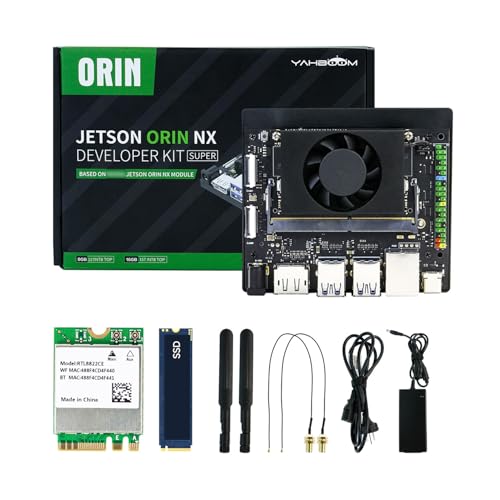
SBCYahboom Jetson Orin NX Super 16GB RAM 157 Tops Developer Kit Ubuntu Jetpack6.2 with 256GB SSD, Power Supply, for AI Large Model (Orin NX 16GB Developer Kit)
Orin NX 16GB — 100 TOPS unified LPDDR5, 14.5 GiB model ceiling, JetPack 6.2 + 256GB SSD included. Amazon verified — runs TensorRT-LLM for 4-12B Q4_K_M at 4k+ context.
 Accelerator
Google Coral USB Edge TPU ML Accelerator coprocessor for Raspberry Pi and Other Embedded Single Board Computers
USB Edge TPU for int8 quantized nets — run the same quantized CoreML model sized here and see why int8 cuts RAM bandwidth but needs per-channel scales.
 $64.51Book
Programming Massively Parallel Processors: A Hands-on Approach
CUDA/GPU parallel programming text for WebGPU PINN and edge GPU workloads.
 $40.00Book
Designing Machine Learning Systems: An Iterative Process for Production-Ready Applications
ML systems-design reference used while building itria.
 $729SBC
LattePanda Sigma - 32GB (DFRobot DFR1080)
Intel Core i5-1340P 12C/16T + 32GB LPDDR5, 30 GiB model ceiling — verified DFRobot SKU DFR1080 product-2671.html, fits 15.8 GiB GGUF (Gemma 26B Q4_K_M ≈19.7 GiB runtime) with headroom. Uses ?tracking_id=vwfcds.
Prices shown were retrieved from the Amazon Product Advertising API on 20 September 2026 and are indicative only — the price and availability on Amazon at the time of purchase apply.
Prices shown were each checked against the Amazon product listing between 8 August 2026 and 17 September 2026 and are indicative only — the price and availability on Amazon at the time of purchase apply.