Launch diff
iPhone 18 Pro vs iPhone 17 Pro: Pure Iteration
Apple's own spec pages for the iPhone 18 Pro and iPhone 17 Pro, diffed: 16 sections changed, 15 identical. Every figure copied from the two documents.

Joshua HriskoPrincipal Engineer
11 min readSan Francisco, CA
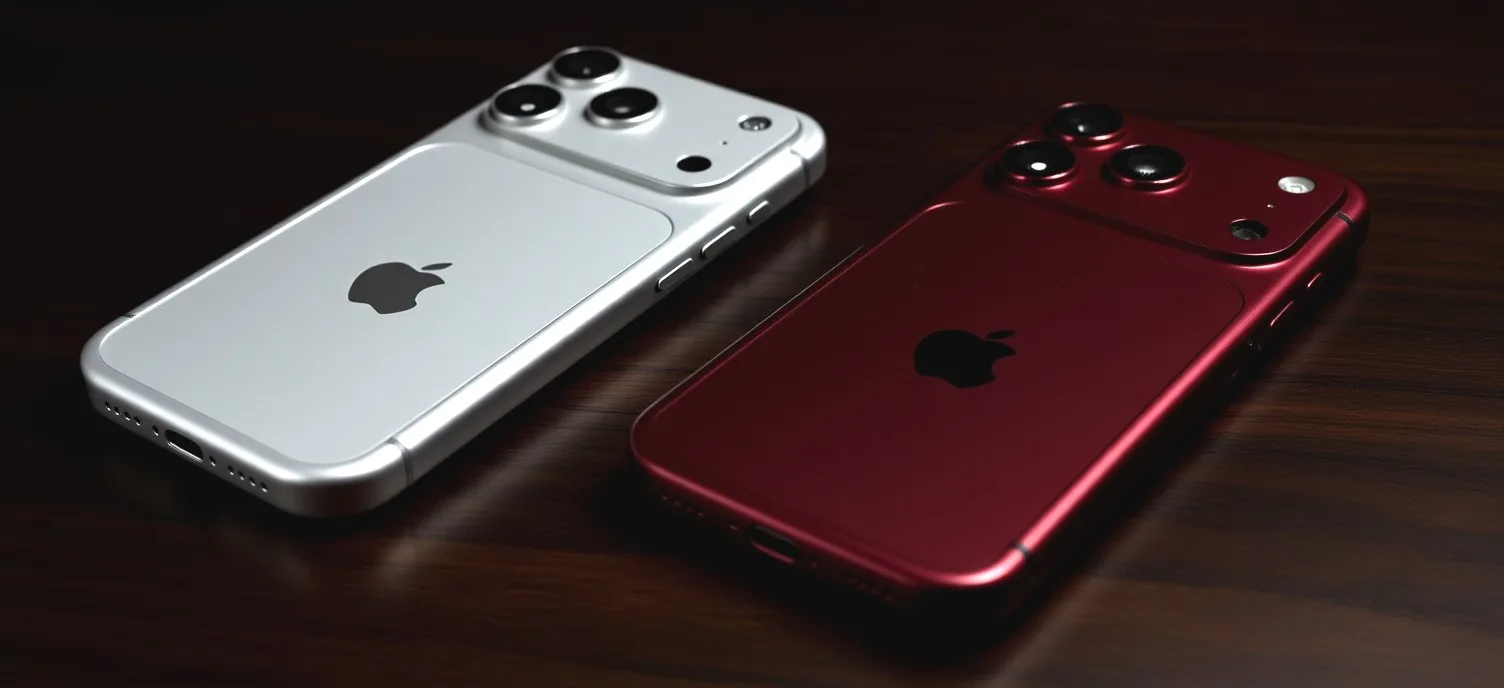
Apple published a technical-specifications page for iPhone 18 Pro on 2026-09-11. Set beside the iPhone 17 Pro’s, 34 specification sections appear on both sheets and can be compared directly; 15 of them are identical line for line.
This note is a diff of those two pages, computed rather than written: every line below is copied from one of the two documents linked above. Nothing here is a review, a benchmark or a recommendation — the studio has not held either device, and a specification sheet is what the vendor says, not what the hardware does.
37 specification sections, grouped by what the comparison found
Changed — 16
Identical, line for line — 15
Wording only, no specification moved — 3
Renamed heading — 1
New section — 1
Gone — 1
Every section on both sheets, grouped by what the comparison found. Drawn from the diff below — not a photograph of either device.
What is being compared
Two vendor specification sheets, one generation apart. The iPhone 17 Pro sheet is Apple’s own archived page for a model it has stopped selling; the iPhone 18 Pro sheet is the live product page. Both are lists of properties under headings — Chip, Camera, Power and Battery — and the comparison joins them by heading and compares the lines underneath.
Scope. The two sheets do not cover the same number of models: iPhone 17 Pro’s page is a single model, while iPhone 18 Pro’s covers 2 (iPhone 18 Pro and iPhone 18 Pro Max) and splits into per-model columns in 6 sections (Finish, Capacity, Size and Weight, Display, Power and Battery, Cellular and Wireless). Every figure below is read from the iPhone 18 Pro column only; the sibling’s numbers are on the vendor’s page and are not the ones compared here.
The Four Core Engineering Shifts
Behind the 16 changed headings sit four fundamental physical and architectural transitions:
- Mechanical Variable Aperture (ƒ/1.48–ƒ/4.0): For the first time on an iPhone, the Fusion Main camera drops its fixed ƒ/1.78 lens in favor of a 4-stop mechanical iris, offering a +44.6% increase in light gathering area at ƒ/1.48 and true optical depth-of-field control.
- Dual-Cluster NPU & A20 Pro Silicon: Apple has paired its 6-core CPU (featuring new Super Cores) and 7-core GPU (+16.7%) with a Dual 16-Core Neural Engine—effectively doubling physical NPU compute blocks to power local Siri AI—alongside Apple’s debut in-house Apple C2 cellular modem.
- Endurance & 15-Minute Charging Velocity: Battery life grows by +3 hours across video playback (36h vs 33h), supported by a jump from 40W charging (50% in 20 min) to 60W Adjustable Voltage Supply (AVS) that reaches 50% in ~15 minutes (a 25% reduction in charge duration).
- Physical Constancy vs. Density: The exterior chassis dimensions (150.0 × 71.9 × 8.75 mm), 6.3” 120Hz display, and IP68 rating are 100% identical, absorbing the mechanical camera system, larger battery, and new 2TB storage ceiling with a modest +5 g weight delta.
Optics and Imaging: The Variable Aperture Milestone
The most consequential hardware evolution between the iPhone 17 Pro and iPhone 18 Pro occurs inside the camera module. While the iPhone 17 Pro relied on a fixed ƒ/1.78 aperture, the iPhone 18 Pro introduces a mechanical iris mechanism offering four physical stops: ƒ/1.48, ƒ/1.8, ƒ/2.8, and ƒ/4.0.
In optical physics, the light-gathering area of an entrance pupil is proportional to , where is the f-number. At the wide-open ƒ/1.48 setting, the lens collects:
This delivers true optical shallow depth-of-field and clean shadow SNR without computational edge-detection blurring artifacts. Conversely, stopping down to ƒ/2.8 (40.3% area) and ƒ/4.0 (19.8% area) expands the hyperfocal depth of field, enabling landscape, group, and macro photography where foreground and background remain tack-sharp across the frame.
In addition to physical aperture switching, the sensor pipelines have been unlocked across the module:
- Telephoto Super-Resolution: The 100 mm (4x) Fusion Telephoto retains its 48MP sensor but now supports native 24MP and 48MP photo outputs (previously constrained to 12MP binned captures).
- Cinematic 4K at 60 fps: Cinematic mode video capture frame rate has doubled from 30 fps to 60 fps Dolby Vision.
- Digital Zoom Reach: Maximum digital zoom expands by +60% from 15x to 24x.
- Manual Pro Controls: Direct in-camera controls for lens aperture, shutter speed, white balance, and real-time histogram display.
Camera Spec Diff
| iPhone 17 Pro | iPhone 18 Pro |
|---|---|
| 48MP Fusion Telephoto: 100 mm (4x), ƒ/2.8 aperture, Hybrid Focus Pixels, 3D sensor-shift optical image stabilization and autofocus, tetraprism design | 48MP Fusion Telephoto: 100 mm (4x), ƒ/2.8 aperture, Hybrid Focus Pixels, 3D sensor-shift optical image stabilization and autofocus, tetraprism design, super-high-resolution photos (24MP and 48MP) |
| 48MP Fusion Ultra Wide: 13 mm, ƒ/2.2 aperture and 120° field of view, Hybrid Focus Pixels, super-high-resolution photos (48MP) | 48MP Fusion Ultra Wide: 13 mm, ƒ/2.2 aperture and 120° field of view, Hybrid Focus Pixels, super-high-resolution photos (24MP and 48MP) |
| Also enables 12MP optical-quality 2x Telephoto: 48 mm, ƒ/1.78 aperture, second-generation sensor-shift optical image stabilization, 100% Focus Pixels | Also enables 12MP optical-quality 2x Telephoto: 48 mm, second-generation sensor-shift optical image stabilization, 100% Focus Pixels |
| 48MP Fusion Main: 24 mm, ƒ/1.78 aperture, second-generation sensor-shift optical image stabilization, 100% Focus Pixels, support for super-high-resolution photos (24MP and 48MP) | 48MP Fusion Main with variable aperture (ƒ/1.48, ƒ/1.8, ƒ/2.8, ƒ/4.0): 24 mm, second-generation sensor-shift optical image stabilization, 100% Focus Pixels, super-high-resolution photos (24MP and 48MP) |
| Latest-generation Photographic Styles | not on this sheet |
| not on this sheet | Pro controls for lens aperture, shutter speed, white balance, and viewing histogram |
| not on this sheet | Apple Reference Image (Fusion Main) |
| not on this sheet | Photographic Styles 3 |
| …and 1 further row in this section | |
Video Recording Spec Diff
| iPhone 17 Pro | iPhone 18 Pro |
|---|---|
| Cinematic mode up to 4K Dolby Vision at 30 fps | Cinematic mode up to 4K Dolby Vision at 60 fps |
| Time-lapse video with stabilization | Time-lapse video with stabilization up to 4K Dolby Vision |
| Digital zoom up to 15x | Digital zoom up to 24x |
| not on this sheet | Cinematic mode effects from video |
| not on this sheet | Pro controls for lens aperture, shutter speed, white balance, and viewing histogram |
| not on this sheet | Smart focus tracking |
| not on this sheet | Improved low-light video at 1080p |
Front Camera Spec Diff
| iPhone 17 Pro | iPhone 18 Pro |
|---|---|
| Time-lapse video with stabilization | Time-lapse video with stabilization up to 4K Dolby Vision |
| Latest-generation Photographic Styles | not on this sheet |
| not on this sheet | Pro controls for shutter speed, white balance, and viewing histogram |
| not on this sheet | Photographic Styles 3 |
| not on this sheet | Smart focus tracking |
| not on this sheet | Improved low-light video at 1080p |
| not on this sheet | Cinematic mode effects from video |
Silicon and Compute: A20 Pro, Dual Neural Engine, and C2 Modem
Silicon changes under the Chip and Cellular and Wireless sections represent major architecture shifts across compute, graphics, artificial intelligence, and baseband radio.
- Dual 16-Core Neural Engine: While the A19 Pro featured a single 16-core Neural Engine, the A20 Pro integrates a Dual 16-Core Neural Engine. This 2x multiplier in physical NPU hardware cores provides the dedicated matrix compute required for uninterrupted local inference of Siri AI and on-device generative foundation models in iOS 27.
- CPU Super Cores: The CPU core distribution remains 6-core (2 high-performance + 4 high-efficiency), but the 2 performance cores are redesignated as Super Cores.
- GPU 7-Core Compute: GPU execution units expand from 6 cores to 7 cores (+16.7% graphics compute capacity) with integrated hardware Neural Accelerators.
- Apple C2 In-House Cellular Modem: The Cellular and Wireless sheet introduces the Apple C2 cellular modem (Models A3472 and A3473 with Band 106), marking Apple’s transition to proprietary baseband silicon.
Chip Spec Diff
| iPhone 17 Pro | iPhone 18 Pro |
|---|---|
| 6-core CPU with 2 performance and 4 efficiency cores | 6-core CPU with 2 super cores and 4 efficiency cores |
| 6-core GPU with Neural Accelerators | 7-core GPU with Neural Accelerators |
| 16-core Neural Engine | Dual 16-core Neural Engine |
| A19 Pro chip | A20 Pro chip |
Cellular and Wireless Spec Diff
| iPhone 17 Pro | iPhone 18 Pro |
|---|---|
| Models A3256 and A3257: ** | not on this sheet |
| For details on 5G and LTE support, contact your carrier and see apple.com/iphone/cellular. | not on this sheet |
| not on this sheet | Model A3472** |
| not on this sheet | FDD-LTE (Bands 1, 2, 3, 4, 5, 7, 8, 12, 13, 14, 17, 18, 19, 20, 25, 26, 28, 29, 30, 32, 66, 71, 106) |
| not on this sheet | UMTS/HSPA+ (850, 900, 1700/2100, 1900, 2100 MHz) |
| not on this sheet | Model A3473** |
| not on this sheet | Apple C2 cellular modem |
Power and Battery: 36-Hour Playback and 15-Minute Charging
Power metrics advance across both battery life and wired/wireless charging velocity:
- +3 Hours Video Playback: Local video playback extends from 33 hours to 36 hours (+9.1%), while streamed video playback moves from 30 hours to 33 hours (+10.0%).
- First-Ever “Typical Use” Metric: The iPhone 18 Pro technical specifications introduce a rated “Typical use: Up to 24 hours” metric, defining an all-day operational baseline.
- Fast-Charge Velocity (0 to 50% in ~15 minutes): The fast-charge window shifts from “50% charge in 20 minutes with 40W adapter” to “50% charge in around 15 minutes when using 60W-capable adapter with Adjustable Voltage Supply (AVS)“—a 25% reduction in charging duration.
- Wireless Charging: Recommended MagSafe adapter threshold moves from 30W to 35W.
Power and Battery Spec Diff
| iPhone 17 Pro | iPhone 18 Pro |
|---|---|
| Fast-charge capable: Up to 50% charge in 20 minutes with 40W adapter or higher (available separately) paired with USB-C charging cable Up to 50% charge in 30 minutes with 30W adapter or higher paired with MagSafe Charger (both available separately) | Fast-charge capable: Up to 50% charge in around 15 minutes when using 60W-capable adapter or higher with Adjustable Voltage Supply (available separately) paired with USB-C charging cable Up to 50% charge in 30 minutes with 35W adapter or higher paired with MagSafe Charger (both available separately) |
| Video playback (streamed): Up to 30 hours | Video playback (streamed): Up to 33 hours |
| Video playback: Up to 33 hours | Video playback: Up to 36 hours |
| not on this sheet | Typical use: Up to 24 hours |
Form Factor Constancy: 15 Unchanged Sections and the 5-Gram Trade
A core insight from diffing the two vendor specification sheets is what did not move. In an industry focused on outer shell redesigns, the iPhone 18 Pro preserves the exact external chassis envelope:
- Height: 5.91 inches (150.0 mm) — 0.0% delta
- Width: 2.83 inches (71.9 mm) — 0.0% delta
- Depth: 0.34 inch (8.75 mm) — 0.0% delta
- Display: 6.3-inch Super Retina XDR OLED (2622 × 1206 at 460 ppi, 120Hz ProMotion, 2000 nits peak outdoor, 1 nit minimum) — 0.0% delta
- Ingress Protection: IP68 under IEC standard 60529 (6 meters up to 30 minutes) — 0.0% delta
The sole physical metric that moves is weight: 206 g (7.27 oz) to 211 g (7.44 oz)—an increase of 5 grams (+2.4%). That 5-gram budget accommodates the moving electromagnet actuators of the mechanical aperture system, a higher-capacity battery cell (+3h playback), and the Dual Neural Engine silicon.
Size and Weight Spec Diff
| iPhone 17 Pro | iPhone 18 Pro |
|---|---|
| Weight: 7.27 ounces (206 grams) | Weight: 7.44 ounces (211 grams) |
Finish Spec Diff
| iPhone 17 Pro | iPhone 18 Pro |
|---|---|
| Aluminum unibody design, Ceramic Shield 2 front, Ceramic Shield back | Aluminum unibody design |
| Silver | not on this sheet |
| Cosmic Orange | not on this sheet |
| Deep Blue | not on this sheet |
| not on this sheet | Black, Silver, Glacier, Burgundy |
| not on this sheet | Ceramic Shield 2 front |
| not on this sheet | Ceramic Shield back |
Capacity Spec Diff
| iPhone 17 Pro | iPhone 18 Pro |
|---|---|
| not on this sheet | 2TB |
The 15 Identical Sections
Unchanged between iPhone 17 Pro and iPhone 18 Pro: Splash, Water, and Dust Resistant, Face ID, Peace of Mind, Location, Charging and Expansion, MagSafe and Wireless Charging, Sensors, Apple Pay, Video Calling, Audio Calling, Audio Playback, Video Playback, Siri, Rating for Hearing Aids, System Requirements — 64 specification lines carried over verbatim.
Identical line for line means exactly that: the two documents carry the same text under these headings. It does not mean the components are the same part — a vendor is under no obligation to mention a change it does not want to describe, and a specification sheet is the only evidence this note has.
3 further sections differ only in wording, with no specification moved: Display, SIM Card, Privacy:
- Display — 1 sentence rewritten, no specification moved.
- SIM Card — 1 sentence rewritten, no specification moved.
- Privacy — 1 sentence rewritten, no specification moved.
Environmental and Documentation Shifts: From Spec Sheet to Product Reports
A structural difference between the two specification pages is the disappearance of the iPhone and the Environment section from the iPhone 18 Pro technical specifications sheet.
This is an editorial and documentation migration rather than an environmental retreat. Apple has moved its product environmental and recycled-material claims into dedicated, standalone Product Environmental Reports (PER) rather than listing them on technical spec sheets.
On the iPhone 17 Pro technical specifications sheet, Apple published specific, quantified materials metrics:
- 100% recycled cobalt in the battery
- 95% recycled lithium in the battery
- 100% recycled gold plating and tin solder in Apple-designed circuit boards
- 100% recycled gold wire in all cameras and gold plating in all connectors
- 100% recycled rare earth elements across all magnets
- 100% recycled tungsten and copper wire in the Taptic Engine
- 100% recycled copper in the vapor chamber enclosure
- 50% recycled aluminum in the enclosure (30% total recycled content by weight)
- 40% renewable manufacturing electricity sourced across production
- 100% fiber-based packaging designed for 25% higher pallet shipping density
Apple Intelligence → Apple Intelligence and Siri AI
| iPhone 17 Pro | iPhone 18 Pro |
|---|---|
| Learn more about Apple Intelligence | Learn more |
| Apple Intelligence is integrated across your apps and experiences to help you communicate, express yourself, and get things done effortlessly. With groundbreaking privacy protections, it gives you peace of mind that no one else can access your data — not even Apple. | not on this sheet |
| not on this sheet | The next generation of Apple Intelligence is centered around you, integrated into your apps, and built with privacy. Apple Intelligence powers Siri AI — an entirely new version of Siri that's more personal, conversational, and powerful, along with helpful features across apps. |
Apple Card — New Heading on the iPhone 18 Pro Sheet
- Credit card created by Apple, designed for iPhone
- Get unlimited 3% Daily Cash at Apple and select merchants when you use Apple Pay, 2% with Apple Pay, and 1% everywhere else
- Use the Wallet app to apply for, manage, and use Apple Card
- Titanium, laser-etched physical credit card for use where Apple Pay is not accepted yet
- Share with up to five people, 13 years or older, in your Family Sharing group to track expenses and manage spending
- Learn more about Apple Card
Complete Specification Diff Reference
For complete verification, the remaining sections diffed across the two vendor sheets are detailed below:
External Buttons and Connectors
| iPhone 17 Pro | iPhone 18 Pro |
|---|---|
| Action button features | not on this sheet |
| Camera controls | not on this sheet |
| not on this sheet | Built-in microphone |
Operating System
| iPhone 17 Pro | iPhone 18 Pro |
|---|---|
| iOS | not on this sheet |
| not on this sheet | iOS 27 |
Accessibility
| iPhone 17 Pro | iPhone 18 Pro |
|---|---|
| Learn more about Accessibility | Learn more |
| Features include: VoiceOver Zoom Magnifier Voice Control Switch Control AssistiveTouch Eye Tracking RTT and TTY support Closed Captions Live Captions Personal Voice Live Speech Type to Siri Vocal Shortcuts Spoken Content | not on this sheet |
| not on this sheet | Assistive Access |
| not on this sheet | VoiceOver |
| not on this sheet | Zoom |
| not on this sheet | Magnifier |
| not on this sheet | Voice Control |
| not on this sheet | Switch Control |
| …and 10 further rows in this section | |
Built-in Apps
| iPhone 17 Pro | iPhone 18 Pro |
|---|---|
| Apple Store | not on this sheet |
| Clips | not on this sheet |
Environmental Requirements
| iPhone 17 Pro | iPhone 18 Pro |
|---|---|
| Operating ambient temperature: 32° to 95° F (0° to 35° C) | 32° to 95° F (0° to 35° C) |
Languages
| iPhone 17 Pro | iPhone 18 Pro |
|---|---|
| Language support | not on this sheet |
In the Box
| iPhone 17 Pro | iPhone 18 Pro |
|---|---|
| iPhone 17 Pro | not on this sheet |
| Documentation | not on this sheet |
| As part of our efforts to reach carbon neutrality by 2030, iPhone 17 Pro and iPhone 17 Pro Max do not include a power adapter or EarPods. Included in the box is a USB-C Charge Cable that supports fast charging and is compatible with USB-C power adapters and computer ports. | not on this sheet |
| We encourage you to use any compatible USB-C power adapter. If you need a new Apple power adapter or headphones, they are available for purchase. | not on this sheet |
| not on this sheet | iPhone with iOS 27 |
What this does not tell you
A specification sheet is a claim, not a measurement. Nothing on either page has been verified here, and two figures printed under the same heading are not automatically comparable — a battery figure is quoted against the vendor’s own test, and the test can change between generations without the heading changing. Where a number moved, this note says which document each side came from and stops there.
Who this is for
Someone deciding whether a generation is worth the upgrade, and specifically someone who wants the unchanged list as much as the changed one. A launch page is written to describe what is new; it has no reason to tell you that the display, the sensors and the wireless charging are the same page of text as last year. If the sections you care about are in “What stayed the same”, that is your answer and it took one page rather than a comparison tool.
Sources
- iPhone 18 Pro — Technical Specifications (live product page)
- iPhone 17 Pro — Technical Specifications (archived support page)
Method: both pages were fetched, parsed into headings and values, and compared by heading. Footnote markers are stripped and HTML entities normalised before comparing, because the two pages are served by different systems that spell the same character differently. Per-model columns are read for the iPhone 18 Pro only. No figure was re-measured, and no text was generated from either document — the tables above are the documents.
Recommended Studio & Hardware Gear
Affiliate links support independent R&DTested studio equipment and reference hardware utilized for this build. Product images & pricing sourced from Amazon Creators API / SparkFun Electronics.
 $1,179.00Phone
Apple iPhone 17 Pro, US Version, 512GB, eSIM, Silver- Unlocked (Renewed Premium)
The outgoing Pro generation, still the reference iOS device for on-device inference work here. Amazon Renewed unit — Apple no longer sells this model new, which is the same fact that retires its specification page (D-415).
 $14.98Book
Real-Time Systems
Schedulability Theory: hyperbolic bound, SRP, and response-time analysis R_i = C_i + Σ⌈R_i/T_j⌉ C_j — formulas this scheduler evaluates to predict deadline misses before Gantt draws them.
 $999.00Computer
Apple 2024 Mac mini Desktop Computer with M4 chip with 10‑core CPU and 10‑core GPU: Built for Apple Intelligence, 16GB Unified Memory, 256GB SSD Storage, Gigabit Ethernet. Works with iPhone/iPad
Apple silicon M4 chip with 10-core CPU, 10-core GPU, and 16-core Neural Engine with 120 GB/s unified memory bandwidth. Compact workstation for on-device Apple Intelligence, CoreML model quantization, and local neural speech inference.
Prices shown were retrieved from the Amazon Product Advertising API on 20 September 2026 and are indicative only — the price and availability on Amazon at the time of purchase apply.
Prices shown were each checked against the Amazon product listing between 8 August 2026 and 17 September 2026 and are indicative only — the price and availability on Amazon at the time of purchase apply.